Saturday, June 14, 2014

Sacramento Rally for Immigration Reform-Monday


seiu-usww

 
“DIA DE JUSTICIA PARA LOS JANITORS “                              “JUSTICE FOR JANITORS DAY”
QUE:       RALLY POR REFORMA DE  IMMIGRACION
DONDE:  EDIFICIO FEDERAL (650 Capitol Mall Sacramento CA 95814)
FECHA:    Lunes 16 de Junio de 2014
HORA:     11:00 a.m.     Trae a Familiares y Amigos!

A call to Action for Immigration Reform!
WHAT:    RALLY  Pro- Immigration Reform
DATE:      Monday June 16, 2014  TIME: 11:00 a.m.    
WHERE:   H.S. BUILDING
                650 CAPITOL MALL Sacramento CA 95814
Bring your Family and Friends!

                                                                                                                                                        Labor donated!

Thursday, June 12, 2014

Eric Cantor Defeated on Immigration Reform

Eric Cantor Defeated by a Conservative Who Rips Crony Capitalism, Opposes Immigration Reform

John Nichols on June 11, 2014 - 12:21 AM ET
Tea Party winner focused on  opposing immigration reform.

From the start of the campaign, Brat was aggressive in his opposition to immigration reform—attacking Cantor for making tepid attempts to move the GOP toward a more moderate position on the issue. But even Brat’s crude campaigning on immigration came with an anti-corporate twist. “Eric Cantor doesn’t represent you, he represents large corporations seeking a never-ending supply of cheap foreign labor,” the challenger argued.
Because Brat highlighted immigration policy as part of the campaign that upset Cantor, it is likely that Republican leaders will move toward an even sharper stance in opposition to meaningful reform. That likelihood led Dream Act Coalition co-director Cesar Vargas to say that with Cantor’s defeat—after being attacked as “too soft on immigration”—“there is no chance of getting anything done legislatively on the subject through the summer, after which it would be difficult to get anything done with presidential speculation beginning.”
Vargas argues that instead of offering House Republicans more time to act on immigration reform, the president “should offer deportation relief, and other forms of administrative relief, now.”

Sunday, June 08, 2014

U.S. Immigration system overwhelmed by new, unaccompanied children

SAN ANTONIO —Immigration system overwhelmed by tens of thousands of women and children from Central America.
In an emergency shelter for unaccompanied children at Lackland Air Force Base here, on a concrete pad where troops would typically muster, roughly 100 teenage boys listened attentively on Thursday to a man who was preaching to them in their native Spanish.
“We know that you are sad, that you are alone,” he said. “Don’t look at the size of the problem. Look toward the solution.” He went on: “Let’s defeat this giant!”
In Phoenix, up to four buses a day arrive at the Greyhound station, each filled to capacity with women and children from El Salvador, Guatemala and Honduras. They crossed the border in Texas, but immigration officials sent them to Phoenix because the Texas facilities were overcrowded.
Since Memorial Day weekend, about 1,000 women and children have been flown to Tucson from Texas, then driven by bus to Phoenix and dumped unceremoniously, weary and hungry, left to find their families scattered around the nation. Some minors will be housed at a naval base in California, and immigration officials are finding extra aircraft. The Federal Emergency Management Agency has been ordered to coordinate efforts to

Thursday, June 05, 2014

Latino Lawmakers Unveil Legislation to Repeal Un-American Proposition...


SACRAMENTO – Announcing a campaign to erase the stain of Proposition 187, the most mean-spirited proposition in California’s history, today, June 4, 2014, legislative leaders announced Senate Bill 396 to repeal Proposition 187.
“Today we remember the xenophobic sentiments that spurred Proposition 187, and we announce Senate Bill 396 to erase its stain from our law books. California will lead the country forward to a brighter day where immigrants are treated with dignity and given an opportunity to thrive,” said Senator Kevin de León, author of Senate Bill 396.
Irvis Orozco, a UC Davis student and Undocumented Student Activist spoke out, "If Prop 187 had been instituted and not found unconstitutional, I would have been denied the chance to get an education and become a leader in California and the nation that I love.”

Tuesday, June 03, 2014

Are California schools failing English Language Learners ?

 The U.S. Justice Department’s Civil Rights Division is looking into whether California is adequately overseeing the education of 1.4 million students in the state who are still learning English, according to court records. ( May, 2014).
The investigation began after civil rights lawyers filed a lawsuit in April 2013 alleging California was failing to provide specialized instruction for 20,000 students whose first language wasn’t English.
Plaintiff’s lawyers said thousands of students - including some who told their stories at a press conference - were left in classrooms without any instruction because school officials didn’t act to provide specialized lessons. They accuse the state of depriving students of their constitutional right to an adequate education.

Sunday, June 01, 2014

FMLN Leader becomes President of El Salvador

Salvador Sanchez Ceren, a onetime rural schoolteacher who became a rebel commander during El Salvador's long civil war was sworn in as president Sunday, the first former guerrilla to lead the Central American nation.
Sanchez Ceren, 69, began his five-year term promising "honor, austerity, efficiency and transparency" at the inauguration ceremony attended by 13 heads of state or government.
Sanchez Ceren won a narrow victory March 9 over Norman Quijano of the Nationalist Republican Alliance, which had governed El Salvador for most of the past two decades.

Friday, May 30, 2014

Immigration Reform; Divisions on Strategy

by David Iaconangelo.  Latin Times 
The New York Times reports that on Tuesday, a group of pro-immigration reform groups including the Service Employees International Union and the US Conference of Catholic Bishops urged President Barack Obama to delay executive action on immigration enforcement until the August Congressional recess in order to give House Republicans time to act on legislation.  A day later, the administration said it was ordering Homeland Security secretary Jeh Johnson to hold off on final recommendations to the president on how immigration-enforcement policies could be made more “humane” – a task understood as preliminary to any potential executive action taken by Obama. 
Eliseo Medina, chief organizer with the SEIU, told the Times that the move would force the hand of Republicans in the House, saying that it would be “absolutely crystal clear for Latino and Asian voters that they blocked” immigration reform if the GOP did not act.  Democratic leaders in Congress have also gotten on board with that strategy; New York senator Chuck Schumer, a key proponent of reform and member of the eight-man bipartisan team that wrote last summer’s comprehensive Senate bill, said last Friday that Obama would have “no choice but to act on his own” if House Republicans refused to pass legislation. 
But some immigrant advocates express anger and impatience with the strategy as deportations of undocumented immigrants continue

Thursday, May 29, 2014

Maya Angelou

There are numerous tributes to Maya Angelou on the web.  Democracy Now is particularly well done. FYI. Maya Angelou taught at CSU- Sacramento ( then Sacramento State) in 1974. 

Wednesday, May 28, 2014

RIP Vincent G. Harding, Historian Who Co-Wrote MLKs Beyond Vietnam Speech

RIP Vincent G. Harding, Historian Who Co-Wrote MLKs Beyond Vietnam Speech


Today we spend the hour remembering the pioneering historian, theologian and civil rights activist Dr. Vincent Harding. He died on May 19 at the age of 82 in Philadelphia. He lived in Denver, but was in Pennsylvania where he had been teaching at Pendle Hill, a Quaker retreat center. Harding was a close adviser to Dr. Martin Luther King Jr. and wrote King’s famous antiwar speech, "Beyond Vietnam: A Time to Break the Silence." King delivered the address at Riverside Church in New York City on April 4, 1967 — exactly one year before he was assassinated in Memphis.

Monday, May 26, 2014

Marcos of the Zapatistas says he is stepping down


Translated by Danica Jorden
Source: Desinformemonos.org

For audio recording of Marcos' goodbye, click here.

“We believe that it is necessary for one of us to die so that Galeano may live on. So we have decided that Marcos must die today,” announced the Zapatista military head and spokesperson.


At 2:08 am this morning, Subcomandante Marcos announced that as of that moment, he had ceased to exist. In a statement made before those attending a tribute to Galeano, the Zapatista assassinated in the Zapatista community of La Realidad, the military head of the Zapatista National Liberation Army (EZLN) noted: “If I were to define Marcos, the character, then I would say without hesitation that he was a mask.”

After more than 20 years at the helm of the political-military organization that first took up arms on the 1st of January 1994, Marcos announced that he has given up the command. He noted that after last year and the beginning of this year’s Zapatista Little School classes, “we realised that there was already a generation that could look us in the face, listen to us and speak to us without guidance or leadership, neither deferring to us nor requiring monitoring.” And so, he said, “Marcos, the personality, was no longer necessary. The next phase of the Zapatista struggle was ready.”

Saturday, May 24, 2014

The Sacramento Bee covers one side of the story; Misses drop in Mexican American/Chicano enrollment

The story of the Chinese graduates from an MBA program in Singapore that  appeared in the Friday on-line paper and on Page 1 of the Saturday print edition  of the Sacramento Bee was interesting and a bit problematic. 
I don't have a problem with this entrance into international education. It could well be a valued new program.
Unfortunately, at the same time, Mexican American/Latino students in teacher preparation at Sac State have been reduced from over 100 per semester  to less than 10. This at the same time as the student population in California  k-12 schools has reached over 50% Latino descendent students.
And, in the graduate programs in education the percentage of Mexican American/Latino students have declined from 35% of the total enrollment! to less than 10%.
While the economic crisis of the last four years contributed to an  overall decline in enrollment,   the percentage decline  in Mexican American enrollment is a consequence of  eliminating programs serving language minority students. Prior to 2010, Sac State had one of the few teacher preparation programs in Northern California  successfully preparing a  large number of diverse future teachers, including bilingual teachers for the states  growing population of  language minority students. Successful programs in Bilingual multicultural teacher preparation  were dismantled  and potential future teachers  went elsewhere.

Wednesday, May 21, 2014

The Crisis in Democracy and Education

James Banks. In Educating Citizens in an American Society says,

A fundamental premise of a democratic society is that citizens will participate in the governing of the nation and that the nation-state will reflect the hopes, dreams, and possibilities of its people. People are not born democrats. Consequently, an important goal of the schools in a democratic society is to help students acquire the knowledge, values, and skills needed to participate effectively in public communities. Educating students to be democrats is a challenge in any kind of society. It is a serious challenge in a society characterized by cultural, ethnic, racial, and language diversity, especially when these variables are used to privilege some individuals from some groups and to deny others equal opportunities to participate.” (p. 1)
The  The promotion of democracy should be a central goal of schooling. Teachers should promote and cultivate democratic values. One way we promote democracy is to teach about civic responsibility, the electoral process, and the U.S. Constitution. A second way is to teach using social participation and service learning strategies . A third way to promote democracy in the classroom is by developing in students a preference for fairness, justice, and mutual respect; these are issues of classroom management.
Excerpts from Choosing Democracy: a practical guide to multicultural education. ( 4th. edition. 2010)

Thursday, May 15, 2014

California- The Most Segregated State for Latino Students

California The Most Segregated State for Latino Students

Date Published: May 14, 2014
State Has Little to Celebrate 60 Years After Brown v Board of Education.

Related Documents
LOS ANGELES--Marking the 60th anniversary of the landmark U.S. Supreme Court decision Brown v Board of Education, the UCLA’s Civil Rights Project/Proyecto Derechos Civiles assessed California's progress in addressing school segregation, and found that California students are more racially segregated than ever.  In their new study, Segregating California’s Future: Inequality and its Alternative 60 Years after Brown v. Board of Education, the report authors conclude that California is the third worst state when it comes to school segregation for African Americans, behind New York and Illinois.  California is, however, the state in which Latino students are most segregated.
The Brown decision challenged the legitimacy of the entire "separate but equal" educational system of the South, and helped accelerate the march toward racial and social equality across the United States, but Brown impacted California very little. According to the report, various subsequent state court decisions resulted in California having no school integration policy, which allowed segregation to grown substantially in the past two decades.
After analyzing demographic data from California's more than 10,000 schools, the authors conclude that California’s school enrollment has grown far more diverse since Brown.  But demographic shifts that could have led to more diverse and integrated schools have, instead, resulted in the educational isolation of Latino and African-American students, in particular.  

Sunday, May 11, 2014

Our Families Can't Wait - Alma Lopez

Our Families Can’t Wait.
In late January, a group of Dream Activists and young supporters in Arizona and other regions near the border met to analyze the campaigns of 2013 and to propose alternative strategies. They issued an open letter calling for a “practical legislative solution for immediate relief for families,  even if it doesn’t include a special path to citizenship" and urged supporters to engage in an aggressive campaign for a presidential executive order  to end deportations of family members of U.S. citizens. (Full text of the letter can be found here: http://ymlp.com/xgjuhqsygmguj)

 In January to get a sense of this viewpoint I interviewed Alma Lopez, an activist in Sacramento.  Alma had co-presented with me the workshop on immigration at the DSA national convention.
Question:
What do you think has been the effect of immigrant rights activism on young people?
“Young people have been playing a major role, along with students and the immigrants community members.  In Sacramento we have been coordinating with people in Northern and Southern California, with people who have been arrested in protests against ICE and deportations.”  
“The civil disobedience and the arrests, have played a major role in telling the community, and the general public, how important it is to keep families together and to come up with a policy that is fair and just for everybody.”

Monday, May 05, 2014

Obama or Republicans- Who is blocking immigration reform ?

As the Republican-led House stonewalls legislative action, insisting the president can't be trusted to enforce the law, Obama's pivot to executive action sets a dangerous political trap for the GOP. They'll feel compelled to oppose his steps to make life easier for undocumented immigrants -- they're already begun to do just that. But that will further alienate their party with Hispanics, the country's fastest-growing demographic, for whom immigration reform is a high priority.
Even worse, if Obama acts on his own Republicans won't share in any of the credit. Democrats will reap political gains with the Latinos -- whom GOP strategists insist the party must win over to stay competitive on the presidential stage -- in 2016 and beyond while Republicans take the side of those calling for deporting unauthorized immigrants.
"When Republicans say the President must do more to enforce the law, we hear it as a lame excuse for their own inaction and a call for the mass deportation of undocumented immigrants," said Frank Sharry, who runs the pro-reform group America's Voice. "Needless to say, the hole the GOP has dug itself with Latino, Asian American, and immigrant voters gets deeper every time they say it."

Saturday, May 03, 2014

Mexican American Studies in Texas.


and, in California?
See posts below. 

Free Trade Agreements are Killing People

Stop TPP.
IN COLOMBIA FREE TRADE BRINGS MORE POVERTY AND MORE KILLINGS
By David Bacon
Truthout Report, 5/2/14

http://www.truth-out.org/news/item/23408-in-colombia-free-trade-brings-more-poverty-and-more-killings


The free trade agreement between the U.S. and Colombia, which took effect on May 15, 2012, hadn't yet reached its second birthday when the office of the public workers' union in Cali, SINTRAEMCALI, was firebombed.   On April 11 a Colombian court had ordered the country's government to apologize for attacking the union, along with that of the telephone workers,  SINTRATELEFONOS, and university workers, SINTRAUNICOL, during the past administration of President Alvaro Uribe, who signed the trade agreement.  The bombs were thrown five days later.

In 2004 a large number of SINTRAEMCALI workers were fired, and over the years since 15 were forced to flee Cali, eight were murdered and over a hundred more threatened.  Last year a leader of the city union's retirees' organization, Luis Fabio Campo Rodriguez, was murdered, and the union's past president Alexander Lopez Maya was revealed as the target of a government assassination program, "Operation Dragon."
Read the entire piece and see photos at the link provided. 

Tuesday, April 29, 2014

Top 5 ways anti-immigrant hate makes its way into media and policy

Support AB 1750- Ethnic Studies in Schools

Re: Support AB 1750 (Alejo)
Dear Assemblyman Alejo:
As Director of the Democracy and Education Institute, I write in support of AB 1750 –Ethnic Studies, and to offer assistance in this work.
Given California’s increasing diversity, it is vitally important that students receive knowledge of the various ethnic groups in our state and that they learn to work together toward building our democracy.
The Democracy and Education Institute has been working on this issue since 2009, and I have been working on the issue since 1986.
As a part of the effort to include Ethnic Studies I encourage you to concentrate on expanding  Ethnic Studies in the History/Social Science Framework for California public schools.  This state document determines what is taught in our schools and what is included in the textbooks.  There is almost no Mexican American history in the document.  There is a 9th grade elective course that could be offered.  Your bill should assist in that the CDE should report on the number and the nature of Ethnic Studies offerings.

Friday, April 25, 2014

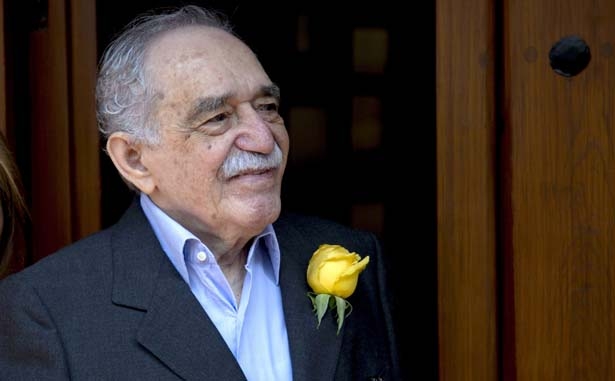
Gabriel Garcia Márquez- On the Left


Gabriel García Márquez taught us how to live with loss, and he told us, over and over again, that other utopias are possible.
Gabriel García Márquez in March, 2014, credit: Eduardo Verdugo, AP // The Nation,
by Greg Grandin


Born in 1927, Gabriel García Márquez was 87 when he died last week. According to his younger brother, Jaime, he had been suffering from complications caused by chemotherapy, which saved his life but accelerated his dementia, a disease that apparently ran in his family. He’d call his brother and ask to be reminded about simple things. “He has problems with his memory,” Jaime reported a few years back.
Remembering and forgetting are García Márquez’s great themes, so it would be easy to read meaning into his senility. The writer was fading into his own solitude, suffering the same fate he assigned to the inhabitants of his fictional town of Macondo, in his most famous novel, One Hundred Years of Solitude. Struck by an insomnia plague, “sinking irrevocably into the quicksand of forgetfulness,” they had to make signs telling themselves what to remember. “This is a cow. She must be milked.” “God exists.”
The narrative of that book is straightforward. Macondo is founded, it grows, catastrophe strikes. Its people, though, experience time not as progressive motion but as circular repetition, engaging in ever more desperate efforts to ward off the forces of oblivion. Life and history are lineal, García Márquez seemed to want to say, but memory, which makes us human, is reiterative. Or, as he wrote at the beginning of his memoir, Living to Tell the Tale, published in English in 2003, “Life is not what one lived, but what one remembers and how one remembers in order to recount it.”
The climax of One Hundred Years of Solitude is famously based on a true historical event that took place shortly after García Márquez’s birth: in 1928, in the Magdalena banana zone on Colombia’s Caribbean coast, not far from where the author was born, the Colombian military opened fire on striking United Fruit Company plantation workers, killing an unknown number. In the novel, García Márquez uses this event to capture the profane fury of modern capital, so powerful it not only can dispossess land and command soldiers but control the weather. After the killing, the company’s US administrator, “Mr. Brown,” summons up an interminable whirlwind that washes away not only Macondo but any recollection of the massacre. The storm propels the reader forward toward the novel’s famous last line, where the last descendant of the Buendía family finds himself in a room reading a gypsy prophesy: everything he knew and loved would be “wiped out by the wind and exiled from the memory of men...because races condemned to one hundred years of solitude did not have a second opportunity on earth.”

Tuesday, April 22, 2014

Reclaim the University- Administration and Faculty Failure at Sacramento State

by Duane Campbell
I just returned from a panel discussion at Sac State by faculty and students on Reclaim the University.  The event was sponsored by Students for Quality Education an organizing group with years of experience.  There  were strong positions on the need to hire new ethnic faculty made by both faculty and students.  Student after student reported that they had few contacts with ethnic faculty.   While there are some 22% of the students who are Latino, less than 6 % of the faculty are Latinos - less today than in 1974.
 African Americans are similarly under represented.
In 1972 the Government Dept. at Sac State had 2 African American faculty members and one Latino.  Today that department has 1 African American faculty member.  A parallel decline in Chicano/Latino faculty has occurred in the History Department and in the College of Education.


A major contributor to the problem in the College of Education has been the elimination of the Department of Bilingual/Multicultural Education.
When the BMED department existed from 1994- 2010,  Mexican American/Latino credential students in the College constituted some 34 % of the total students enrolled.  Since the elimination of the department Mexican American/Latino students constitute some 6% of the students in teacher preparation.  Latino students make up more than 40% of the students in local k-12 schools. Who will be their teachers?

Saturday, April 19, 2014

Alejo bill moves California toward offering Ethnic Studies

by Roque Planas
A bill introduced last month by California Assemblyman Luis Alejo (D-Salinas) would require the state's Department of Education to develop a model for implementing a standardized, statewide ethnic studies curriculum for high schools.
Although controversies over Mexican-American studies have roiled conservatives in Southwestern states, Alejo's bill could put California on the path to adopting one of the most ambitious ethnic studies program for public schools in the country.
Latinos are the largest ethnic group in California schools by far, making up 53 percent of the student body, according to the California Department of Education. They are followed by non-Hispanic whites, at 26 percent, and Asians, at 9 percent.
But though people of color make up the solid majority of California's schools, ethnic studies proponents say their history and culture remain largely absent from classrooms and textbooks.
"We have probably one of the most diverse student populations in the country," Alejo told The Huffington Post. "We recognize those unique values and history, language and literatures -- all of that should be included in California’s high school curriculum."
See the well researched article here.  
This is an important step in the direction urged by the Mexican American Digital History Project for years. 

Thursday, April 10, 2014

Texas- One step toward Ethnic Studies.

by Roque Palanco
Texas took a step toward instituting ethnic studies courses in public schools across the state on Wednesday, with the State Board of Education voting 11 to 3 to create instructional materials for such classes.
Activists had pushed since November for the Texas SBOE to create a statewide Mexican-American studies curriculum, arguing that such courses would help boost student achievement and foster cultural awareness in the state’s majority-Hispanic school system.
Instead, the more modest measure approved Wednesday mandates the adoption of textbooks for elective classes on Mexican-American studies, African-American studies, Native-American studies and Asian-American studies. Courses will be developed locally and schools will be able to adopt successful models developed in other districts using the state-approved instructional materials.
ed.note. What about California????
The idea won bipartisan support, with conservatives applauding the approach of giving local districts control over which curricula to adopt, while ethnic studies advocates looked forward to taking a greater role in developing the courses than if the state had been charged with the task.

Texas School Board Ducks Mexican-American Studies Vote

By WILL WEISSERT Associated Press  April 10, 2014. 

The Texas Board of Education bypassed voting Wednesday on a hotly debated proposal to create a statewide Mexican-American studies course as a high school elective, instead simply asking publishers to submit textbooks for such a class and several other ethnic studies topics by the 2016-2017 school year.
Democratic member Ruben Cortez of Brownsville had promised to call for a vote on creating a stand-alone Mexican-American studies course, and supporters maintained it was key to truly understanding a state that was once part of Mexico and where Hispanics make up 51 percent of public school students.
But opponents dismissed the idea as reverse racism, arguing that it would inject leftist ideology into the classroom. Cortez said when it became clear that the board's 10 Democrats and five Republicans weren't ready to support his proposal, he settled on an alternative approach.

Monday, April 07, 2014

Immigration Uprising: How Change Happens


HOW CHANGE HAPPENS: THE IMMIGRATION UPRISING


By David Bacon

Two weeks ago hundreds of people inside the Tacoma Detention Center launched a hunger strike against its private operator, Geo Corporation, demanding better conditions and a moratorium on deportations. Activists, who have held vigils outside the center for years, now gather every day to support those inside. A week later the strike spread to another Geo facility in Texas. According to Maru Mora Villapando of Latino Advocacy in Tacoma, in both locations the company has isolated the strikers and in Tacoma threatened to force-feed them.

Immigrants, workers, union members, people of faith and community activists demonstrate in front of the Mi Pueblo market in East Palo Alto, California, calling for a moratorium on deportations and on the firing of undocumented workers because of their immigration status. (Photo: David Bacon)

This is only the most dramatic action of a wave of activity around the country, in which community and labor activists, and now deportees themselves, have refused to quietly endure increased immigration enforcement. They are mostly young, deriving much of their inspiration from the Dreamers who forced the administration two years ago to begin providing legal status to some of those who’d otherwise be deported. These activists refuse to wait for Congress to enact its immigration reform proposals, and in fact many reject them as fatally compromised. Instead, they’re organizing actions on the ground to win rights and equality:

Yes We Can. NYTimes Editorial


"Yes He Can, on Immigration" - NYTimes Editorial  


If President Obama means what he says about wanting an immigration system that reflects American values, helps the economy and taps the yearnings of millions of Americans-in-waiting, he is going to have to do something about it - soon and on his own. It has been frustrating to watch his yes-we-can promises on immigration reform fade to protestations of impotence and the blaming of others. All Mr. Obama has been saying lately is: No, in fact, we can't, because Republicans and the law won't let me.
  
Mr. Obama is correct when he complains that long-term immigration repairs have been throttled in Congress. Neo-nativist Republicans fixated on mass deportation have blocked a worthy bipartisan bill. But Mr. Obama has compounded this failure by clinging to a coldblooded strategy of ramped-up enforcement on the same people he has promised to help through legislation that he has failed to achieve.

Saturday, April 05, 2014

Deportations Hurt All Workers


Photo from Massachusetts Jobs with Justice
Liz Cattaneo. Jobs with Justice
Although President Obama has called deportations “heartbreaking,”immigrants in the United States continue to be separated from their families at a record pace. Nearly two million deportations have taken place under the Obama administration to date. On March 13, the President finally ordered the Department of Homeland Security (DHS) to review its deportation practices but has rebuffed calls to use his executive powers to halt deportations for individuals who haven’t committed serious crimes.
A growing chorus of civil rights, faith, legal and human rights advocates are criticizing the administration’s deportation policy as unjust, arbitrary and counter to the spirit of immigration reform supported by the president and an overwhelming majority of Americans. There are myriad reasons why deportations should be curbed, but to start, the system makes it too easy for workers to be susceptible to abuse on the job.