Showing posts with label imperialism. Show all posts

Sunday, September 24, 2023

The Border: Imperialism and Mexico


Title
: Imperialism: The U.S. and Mexico

Description: The relationship between the United States and Mexico, both today and historically, constitutes a significant feature of U.S. imperialism. Speakers at this panel event will discuss Lenin's and more recent socialists' concepts of imperialism; the long drive by U.S. capital and the U.S. government to dominate Mexico and seize economic benefits at the expense of Mexico and the working class of both countries; and Mexican/Chicano labor in the U.S. and in the Maquiladoras in Mexico, including the ways in which the U.S. imperialist relation to Mexico has divided the working class and the progressive responses to those divisions. This unequal relationship continues today, impacting workers on both sides of the border. We hope to develop a better understanding of the relationship between the two countries and deepen our bonds of solidarity. The panelists are Bill Gallegos, Luisa Martinez, and Vamsi Vakulabharanam. This panel event was organized by the Democratic Socialists of America's National Political Education Committee.


Registration.


Date etc
: Saturday, September 30, 2:00 PM to 3:30 PM ET

Linkhttps://actionnetwork.org/events/npec-presents-imperialism-the-us-and-mexico?source=direct_link&


Saturday, December 07, 2019

Capitalism, Imperialism, and Borders - Webinar


The Democratic Socialists of America’s Immigrant Rights Working Group organized a very successful webinar on the topic, No One Is Illegal! Capitalism, Imperialism and Borders on November 21. Hundreds of people registered and about eighty participated.  We were assisted by the national office of DSA. 

For those that missed the webinar live, find the link to the recording here.


 We encourage immigrant rights groups and activists  to share it and also organize discussions around it. The speakers explained the roots and nature of the attack on immigrants and presented a working class strategy for resistance and liberation.

This webinar is the first of several that we will be organizing. The next one will be a version of this one in Spanish. Please stay tuned for details on that one. We are also going to be putting together a webinar on practical tips and models for immigrant rights organizing. 

Many on the first webinar asked for more information from the panelists who joined us. See below for both their bios and publications. Also, to supplement these, we encourage everyone to read, share and discuss the many excellent articles in the DSA’s Fall 2019 Socialist Forum

Harsha Walia is a community organizer and cofounder of No One Is Illegal. She is the author of Undoing Border Imperialism. She’s based in Vancouver, British Columbia in Canada.

Todd Miller is the author of Empire of BordersBorder Patrol Nation. You can read an interview that summarizes his argument on Jacobin. He writes for NACLA among other publications. He’s based in Tucson, Arizona. 

Justin Akers Chacon is the author of No One is Illegal and Radicals in the Barrio. He wrote a recent article on Punto Rojo entitled The Anti-Migrant International. He is an immigrant rights activist in San Diego, California and a co-founder of the Coalition to Close the Concentration Camps.

Jorge Mújica is author of Voces Migrantes: Movimiento 10 de Marzo, a member of DSA, an Organizer with Arise Chicago, and a National Council member of the National Writers Union. He is based in Chicago, Illinois. 


Friday, April 25, 2014

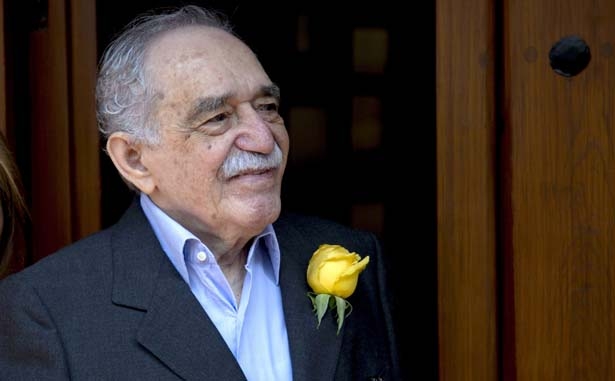
Gabriel Garcia Márquez- On the Left


Gabriel García Márquez taught us how to live with loss, and he told us, over and over again, that other utopias are possible.
Gabriel García Márquez in March, 2014, credit: Eduardo Verdugo, AP // The Nation,
by Greg Grandin


Born in 1927, Gabriel García Márquez was 87 when he died last week. According to his younger brother, Jaime, he had been suffering from complications caused by chemotherapy, which saved his life but accelerated his dementia, a disease that apparently ran in his family. He’d call his brother and ask to be reminded about simple things. “He has problems with his memory,” Jaime reported a few years back.
Remembering and forgetting are García Márquez’s great themes, so it would be easy to read meaning into his senility. The writer was fading into his own solitude, suffering the same fate he assigned to the inhabitants of his fictional town of Macondo, in his most famous novel, One Hundred Years of Solitude. Struck by an insomnia plague, “sinking irrevocably into the quicksand of forgetfulness,” they had to make signs telling themselves what to remember. “This is a cow. She must be milked.” “God exists.”
The narrative of that book is straightforward. Macondo is founded, it grows, catastrophe strikes. Its people, though, experience time not as progressive motion but as circular repetition, engaging in ever more desperate efforts to ward off the forces of oblivion. Life and history are lineal, García Márquez seemed to want to say, but memory, which makes us human, is reiterative. Or, as he wrote at the beginning of his memoir, Living to Tell the Tale, published in English in 2003, “Life is not what one lived, but what one remembers and how one remembers in order to recount it.”
The climax of One Hundred Years of Solitude is famously based on a true historical event that took place shortly after García Márquez’s birth: in 1928, in the Magdalena banana zone on Colombia’s Caribbean coast, not far from where the author was born, the Colombian military opened fire on striking United Fruit Company plantation workers, killing an unknown number. In the novel, García Márquez uses this event to capture the profane fury of modern capital, so powerful it not only can dispossess land and command soldiers but control the weather. After the killing, the company’s US administrator, “Mr. Brown,” summons up an interminable whirlwind that washes away not only Macondo but any recollection of the massacre. The storm propels the reader forward toward the novel’s famous last line, where the last descendant of the Buendía family finds himself in a room reading a gypsy prophesy: everything he knew and loved would be “wiped out by the wind and exiled from the memory of men...because races condemned to one hundred years of solitude did not have a second opportunity on earth.”