Showing posts with label El Salvador. Show all posts

Wednesday, July 19, 2023

The Crimes of Elliot Abrams


The Crimes and Dangers of Elliott Abrams: Why Biden Should not Appoint Him


By Ariel Gold and Rev. Graylan Scott Hagler/Waging Nonviolence/July 18, 2023


It was a bright sunny March morning in 1980. Archbishop Oscar Arnulfo Romero was saying mass at a church hospital in San Salvador when a bullet from a sniper rifle ripped through his heart. He stumbled and fell to the ground, dead.


Romero started life and ministry as a conservative. But, after his friend Rev. Rutilio Grande was assassinated to discourage other faith leaders from supporting Salvadorian peasants, Romero underwent a political and theological conversion. Picking up where Grande left off, Romero embraced a “theology of liberation,” a perspective that espouses G-d’s preference for the poor and oppressed. His visibility as archbishop elevated his voice and the credibility of his critique of the conditions faced by peasants in El Salvador.


A month before his assassination, Romero wrote President Jimmy Carter requesting a halt to U.S. military assistance to the Salvadoran government.


Over 250,000 people attended Romero’s funeral demonstrating the love of the Salvadoran people and echoing his demands for justice. Tragically, however, they were swimming against a historical current of meddling and manipulation which included murder, often orchestrated or at the very least condoned from the U.S.


Intentionally ignoring two U.S. embassy cables naming the general who ordered his personal bodyguard to carry out the assassination of Romero, in 1982, Elliot Abrams, the newly appointed Assistant Secretary of State for Human Rights and Humanitarian Affairs, said, “anybody who thinks you’re going to find a cable that says that Roberto d’Aubuisson murdered the archbishop is a fool.” Thanks to Abrams and his ilk’s support, U.S. military assistance to the Salvadoran regime was dramatically increased that year. The following year, the U.S. gifted the Salvadoran military and government with U.S. advisors.


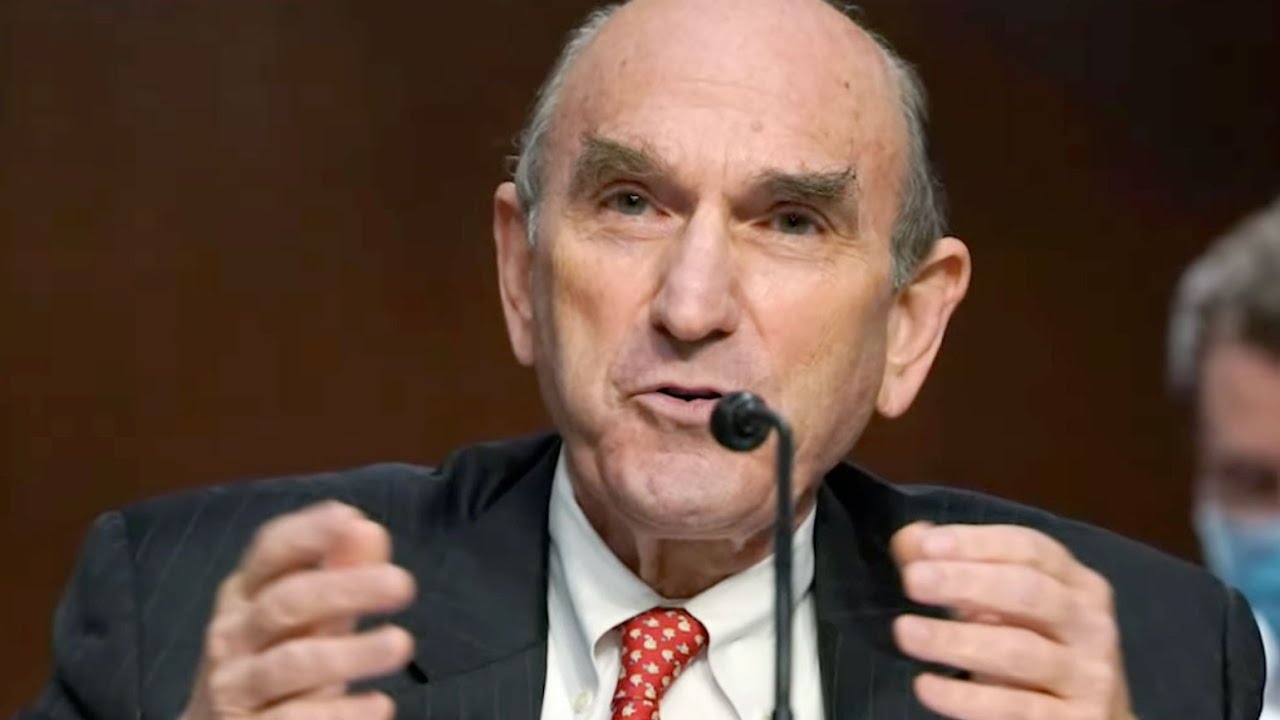
Last week, President Biden nominated Republican Senate leader Mitch McConnell’s pick to join the State Department Bipartisan Advisory Commission on Public Diplomacy, Elliot Abrams. If you’re not already outraged and infuriated, keep reading.


Under Abrams’ watch, over the 12 years of the Reagan/Bush Sr. administrations, 75,000 Salvadorians were killed. In the village of El Mozote, the army’s Atlácatl Battalion herded women and children into a church convent and opened fire with U.S.-supplied M-16 automatic rifles before burning the building down. One hundred and forty children, average age six, were killed. In 1994, with blood still dripping from his hands, Abrams referred to the U.S.’s record on El Salvador as a “fabulous achievement.” 


In addition to supporting the Salvadorian junta, Abrams was a defender of the Guatemalan Montt regime which oversaw the mass murder, rape and torture of scores of Indigenous Ixil Mayan people in the 1980s. The Montt regime was so brutal that it was later classified by the United Nations as genocidal. From his conviction for lying to Congress during the Iran-Contra affair, to his roles supporting the Iraq war, scuttling the Iran nuclear deal, and attempting to orchestrate a coup in Venezuela as recently as 2019, one thing is clear: Abrams doesn’t have a diplomatic bone in his body. 


Abrams epitomizes an extreme form of American biblical nationalism, dressed in the distortions of Christianity and Judaism that ironically echo the papal bulls of 1452. These papal decrees, known as the “Doctrine of Discovery,” codify the rights of white nations to acquire and dominate any lands they “discovered.” Similarly, Abrams speaks the language of the Global North proclaiming that their hegemony is the natural order of the world, as G-d wills it to be.


The Doctrine of Discovery inspired the Monroe Doctrine, which declared the “right” to exploit and plunder Latin America to be exclusive to the U.S. “We should consider any attempt on their part to extend their system to any portion of this hemisphere as dangerous to our peace and safety,” President James Monroe said. This served as a philosophical justification for the ideological boots Abram’s wore to stomp all over Latin America, the Middle East and other places. Abrams has left bloody footprints across the globe.


Steps have been taken over the past couple of decades to repair the damage done by Abrams and Co. in Latin America and other parts of the world. In December 2011, the El Salvadoran government apologized for the El Mozote massacre. In 2018, Oscar Romero was elevated to the status of saint. Pope Francis said Romero “left the security of the world, even his own safety, in order to give his life according to the gospel.” And just a few months ago, on March 30, the Vatican, formally repudiated the “Doctrine of Discovery,” and called it antithetical to the Catholic faith.


Justice is long overdue for Romero, the other Salvadorian faith leaders who were murdered in the 1980s, the children murdered in El Mozote, and the Ixil Mayan women raped by death squads in Guatemala. To honor those who died and continue to suffer from the fires Elliott Abrams lit and fanned in their countries, we must reclaim the name of G-d from the political and religious ideologies that twist it for hatred and violence. The first step we must take is to ensure that Abrams does not receive another appointment to another U.S. administration. The blood of his victims call out from the ground, and hearing their cries we are called to act and respond.


This story was produced by Fellowship Magazine


From: David Richardson <drdaver@hotmail.com>
Sent: Wednesday, July 19, 2023 8:11 PM
To: David Richardson <drdaver@hotmail.com>
Subject: The Crimes and Dangers of Elliott Abrams: Why Biden Should not Appoint Him
 

Friday, August 12, 2022

Support for Human Rights in El Salvador

 I am writing today to ask you to sign on to an international letter expressing alarm about the escalating attacks on human and constitutional rights in El Salvador, including unlawful arrests and detention against members of the political opposition.


Here’s the letter in Spanish (and translation in English) the sign up page


As you may be following, the people of El Salvador are facing a human rights emergency after President Bukele imposed a nationwide State of Exception at the end of March. Now entering its sixth month, the State of Exception suspends fundamental constitutional rights, such as the right to assembly and the right to an attorney. Over 50,000 people have been arrested without warrants, with the vast majority now being held in extended pre-trial detention. The staggering level of arbitrary arrests has sparked a new wave of protest from family members of thousands of innocent people who have little to no other recourse.


However, the attacks on constitutional rights and due process did not begin with the State of Exception. Between April and November 2021, over a dozen public figures from the leftist opposition FMLN party were unlawfully arrested (read more here). 


A few have been released to house arrest but nine remain in prison under extended pre-trial detention without any evidence having been presented against them; as their family members have said, “It’s as if they are serving a sentence without ever having been to trial.” While in prison, they have experienced systematic violation of their human and constitutional rights, including the right to see their attorneys, to medical attention, and to see their family members.


It is essential that we speak out against these unlawful arrests and other forms of political persecution that are clearly intended to silence dissenting voices and dismantle the organized popular opposition, as well as against the overall crisis under the State of Exception.


Again, here’s the letter in Spanish (and translation in English) and the sign up page to sign on before August 22.


For the past year, CISPES has been accompanying the work of a new group, the Committee of Family Members of Political Prisoners of El Salvador (COFAPPES). Given the Bukele administration’s near-complete control over the judicial system at this point - having illegally removed and replaced all five magistrates of the Supreme Court’s Constitutional Chamber, the Attorney General, and hundreds of judges across the country - COFAPPES is clear that international solidarity is essential to their struggle, including to shine an international media spotlight on these abuses.


In support of COFAPPES’ demands, CISPES is currently circulating an organizational sign-on letter to the Attorney General, the Human Rights Ombudsman and the Constitutional Chamber calling on them to respect and uphold constitutional law for all Salvadorans as well as to act impartially and swiftly to release political prisoners and others being held in violation of due process. The letters will be delivered at the end of August.


Would you be able to sign on? We are asking for signatures by Monday, August 22 so the letter can be delivered later that week. You can sign up here.


Let me know of any questions, concerns or ideas. Thank you for your solidarity.


Allan


-- 
Allan Fisher

Monday, January 08, 2018

Trump Terminates TPS for El Salvadorans

Termination of Temporary Protection Status for El Salvadorans is Inhumane, Says Immigrant Legal Resource Center 


Termination of Temporary Protection Status for El Salvadorans is Inhumane, Says Immigrant Legal Resource Center   Today, the Department of Homeland Security terminated the Temporary Protected Status (TPS) designation for El Salvador. In 18 months, approximately 200,000 Salvadoran TPS holders, the largest population living in the U.S. under this designation, will be out of status and subject to deportation.   Said Amanda Baran, Consultant to the Immigrant Legal Resource Center and co-author of ILRC’s report “Economic Contributions by Salvadoran, Honduran and Haitian TPS Holders”:   “To disregard the contributions that El Salvadorans have made in communities across this country by stamping an expiration date on their lives here is inhumane. Salvadoran TPS holders are our colleagues and neighbors, and the economic engines of our construction and service sectors. El Salvador is one of the world’s most dangerous countries and will be unable to absorb the return of these thousands of people whose lives are inextricably intertwined with those of ours here in the United States.     “This Administration continues to make one reckless and heartless policy decision after another. Our economy and communities thrive because of the contributions of El Salvadoran TPS holders, and indeed all TPS holders. We are calling on Congress to immediately pass the American Promise Act of 2017 introduced by Rep. Nydia M. Velázquez (D-NY), which will allow TPS beneficiaries from all thirteen participating countries who have lived in the United States for three years to continue to live and work here while they pursue a path to naturalization.”   Deporting current El Salvadoran TPS holders will cost our nation more than $1.8 billion; lead to a GDP reduction of $3.9 billion over a decade; and incur $4.8 billion in lost Social Security and Medicare contributions over a decade, according to findings from ILRC’s report “Economic Contributions by Salvadoran, Honduran and Haitian TPS Holders.”   Despite the termination of TPS for individuals from El Salvador, those living in certain parts of the U.S. (the jurisdictions covered by the United States Court of Appeals for the 9th and 6th Circuits) may be eligible to pursue options to adjust their status. ILRC urges legal practitioners to review its Practice Alert on Ramirez v. Brown for more 
information.                                  

Saturday, May 14, 2016

Defend Immigrant Children

Bernie Sanders for President


My father Eli immigrated to America from Poland in 1921 after World War I at the age of 17. He was not a refugee fleeing war, although much of his family later became victims of the Holocaust. He came to America looking to make a better life. He never made a lot of money, but it didn’t matter because he was able to start a family and send his two sons to college. That meant the world to him and he loved this country.
While my father came here as an immigrant seeking economic opportunity, many immigrants arrived in our country fleeing war, oppression and violence. This is true today for thousands of women and unaccompanied children who came to our country in the last several years fleeing horrific violence in Latin America.
This week the media reported something that I find not just wrong, but inhumane: President Obama is currently planning "a month-long series of raids in May and June to deport hundreds of Central American mothers and children" who came to our country fleeing that same violence.
Sending women and children back into harm's way after they already fled horrendous violence in Central America is painful and inhumane, and must be stopped.
Donald Trump has of course called for building a "Great Wall" along the border with Mexico. Hillary Clinton previously said that these same children who fled violence in Latin America "should be sent back" in order to "send a clear message."
I happen to see things differently. I don't believe that the United States should turn away from our historic role as a haven for the oppressed.
I recently met a young Salvadoran woman who came to the United States on her own at the age of 15 to flee gangs trying to recruit her. I’ve also spoken with many children who have told me with tears streaming down their faces that they live in daily fear that their parents will be taken away.
The United States of America must continue to be a refuge for the poor, the tired, the oppressed, and certainly for women and children fleeing horrific violence.
I urge President Obama to use his executive authority to protect families by extending Temporary Protective Status for those who fled from Central America, and I ask you to join me.
In solidarity,
Bernie Sanders


Saturday, January 09, 2016

Obama Admin. Appalling Home Raids

President Obama once said this about his administration’s deportation priorities: “We’ll keep focusing enforcement resources on actual threats to our security. That means felons, not families. That means criminals, not children. It means gang members, not moms who are trying to put food on the table for their kids.”
Encouraging words, a year ago. But a new year has dawned upon an appalling campaign of home raids by the Department of Homeland Security to find and deport hundreds of would-be refugees back to Guatemala, Honduras and El Salvador. The targets are those who arrived in a recent surge of people fleeing shockingly high levels of gang and drug violence, hunger and poverty and who offered themselves at the border to the mercy of the United States, but ultimately lost their cases in immigration court.
Since New Year’s, the administration has been sending agents into homes to make an example of the offenders and to defend the principle of a secure border. A president who spoke so movingly about the violent gun deaths of children here has taken on the job of sending mothers and children on one-way trips to the deadliest countries in our hemisphere. Mothers and children who pose no threat, actual or imaginable, to our security.

Sunday, May 31, 2015

Archbishop Oscar Romero, a True Salvadoran Patriot

by Jimmy Franco, Sr. 

A ceremony attended by 300,000 people was held on May 23, in the city of San Salvador to honor and celebrate the beatification of El Salvador’s deceased Archbishop Oscar Romero. Supportive commemorations were also held in Los Angeles and other cities. Pope Francis made the decision to beatify Romero which is a step before sainthood after designating him as a martyr who gave his life in 1980 for the cause of social justice. Prior to his death, the
300,000 people gather as Archbishop Oscar Romero is honored and beatified.
300,000 people gather as Archbishop Oscar Romero is honored and
beatified.
Archbishop had assisted poor communities in El Salvador in order to improve their lives and had been a public and outspoken critic of the brutal Salvadoran military. He had demanded that the army halt the widespread violence and killings being committed against innocent people who were merely attempting to exercise their basic rights. Monsignor Romero wrote a personal letter to President Jimmy Carter in early 1980 pleading with him to end US financial and military support of the Salvadoran armed forces due to its violence and human rights violations being inflicted upon civilians who merely wanted democracy. Carter never directly answered the Archbishop’s letter and Romero was murdered shortly after by a member of a right-wing death squad who shot him through the heart as he gave mass in a cathedral. Days after at Romero’s funeral service, Salvadoran soldiers opened deadly fire on the huge crowd that came to pay their respects to the martyred Archbishop. The murders by the government of many other Catholic church members were to follow as their peaceful activities to help the poor and pronouncements for an end to the violence had them branded as enemies by the military and their US trainers. These anti-democratic actions by the Salvadoran military and their allied death squads would lead to a violent and deadly 12-year long civil war which tore apart the country’s social fabric. Presidents Carter and particularly Reagan openly supported, financed, armed and trained El Salvador’s military and its death squads throughout the long war.
The background of the brutal 1980’s Salvadoran civil war
The civil war in El Salvador was caused by the repressive Salvadoran government that used violence to block fair elections and the democratic participation of the Salvadoran People and their chosen political parties. Peaceful gatherings were regularly attacked with deadly force as a brutal message was being conveyed by the military government to the civilian population that they should accept injustice and stay in their place. The majority of the people as well as many representatives of the church refused to 
The murder of Romero by a US-supported death squad turned people against the govt.
do so as peaceful protests and public outcries continued to demand that the government respect human rights and cease their attacks upon civilians. These democratic aspirations were met by more violence and deaths on the part of the military. Leaving no other available option, the opposition groups coalesced into the FMLN (Frente Farabundo Marti de Liberacion Nacional) to oppose the US supported military government and civil war broke out.

Monday, July 07, 2014

No Childhood Here- Why Central American Children flee


New Report Helps Explain Why Central American Children Are Leaving Their Home Countries


http://immigrationimpact.com/2014/07/01/new-report-helps-explain-why-central-american-children-are-leaving-their-home-countries/
Portside Date: 
July 7, 2014
Author: 
Guillermo Cantor

Ever since President Barack Obama described [1] the record number of minors traveling alone and crossing the U.S.-Mexico border as an “urgent humanitarian situation requiring a unified and coordinated Federal response,” the debate about how to address the unaccompanied migrant children has become increasingly heated, especially about the reasons leading them to come here. News reports and congressional hearings [2]have covered various arguments to explain the reasons behind these children’s journeys. Unfortunately, what becomes clear is that many of those arguments are not backed by any factual evidence, and, what is even worse, some are intentionally aimed at derailing the eventual overhaul of our broken immigration system.
In an attempt to help fill the knowledge gap, the American Immigration Council is releasing a study [3] today that was conducted by Elizabeth Kennedy, a Fulbright Fellow currently doing research in El Salvador on child and youth migrants returned from Mexico and the United States. Based on evidence obtained through 322 interviews with children recently returned to El Salvador, as well as conversations with journalists and local, regional, and government officials, this report sheds light on some of the structural conditions that compel minors to migrate to the United States or other countries in the region.
In essence, the report [3] highlights the intricate ways in which violence, extreme poverty, and the desire to reunite with family members, help shape these kids’ decision to migrate. According to the report, “crime, gang threats, or violence appear to be the strongest determinants for children’s decision to emigrate. When asked why they left their home, 59 percent of Salvadoran boys and 61 percent of Salvadoran girls list one of those factors as a reason for their emigration.” In El Salvador, the report shows, the issue of gang violence is a widespread phenomenon. According to the findings, gang violence appears as the primary cause of emigration in 11 of 14 of El Salvador’s departments. In the departments of Cuscatlán and Usulután for example, over 85 percent of children flee for this reason.
Violence alone, however, does not explain the phenomenon of kids’ migration in its entirety. In some regions of El Salvador, for example, extreme poverty is identified as the most common reason for why children decide to leave. In addition, about 35 percent of the minors interviewed reported family reunification as a reason for their emigration, but in many of those cases the desire to reunite with a family member in the U.S. is cited in addition to the fear of crime and violence.
Crossing the border is an immensely risky journey. Given that being smuggled into the United States can itself end in death, it stands to reason that conditions must be extremely dire for Central American parents to send their children on such a dangerous journey. In fact, the report specifically demonstrates that leaving the country is, for these children (and their families), often a last resort. Children, furthermore, are not just coming to the United States in search of protection. According to UNHCR [4], a steep rise has also been observed in the numbers of asylum requests in in the neighboring countries of Belize, Costa Rica, Nicaragua, Panama, and Mexico.
All in all, the study highlights the fact that the majority of these children are in an extremely vulnerable situation. In this context, militaristic solutions are clearly not the answer.
- See more at: http://immigrationimpact.com/2014/07/01/new-report-helps-explain-why-cen... [5] since President Barack Obama described the record number of minors traveling alone and crossing the U.S.-Mexico border as an “urgent humanitarian situation requiring a unified and coordinated Federal response,” the debate about how to address the unaccompanied migrant children has become increasingly heated, especially about the reasons leading them to come here. News reports and congressional hearings have covered various arguments to explain the reasons behind these children’s journeys. Unfortunately, what becomes clear is that many of those arguments are not backed by any factual evidence, and, what is even worse, some are intentionally aimed at derailing the eventual overhaul of our broken immigration system.
In an attempt to help fill the knowledge gap, the American Immigration Council is releasing a study today that was conducted by Elizabeth Kennedy, a Fulbright Fellow currently doing research in El Salvador on child and youth migrants returned from Mexico and the United States. Based on evidence obtained through 322 interviews with children recently returned to El Salvador, as well as conversations with journalists and local, regional, and government officials, this report sheds light on some of the structural conditions that compel minors to migrate to the United States or other countries in the region.
In essence, the report highlights the intricate ways in which violence, extreme poverty, and the desire to reunite with family members, help shape these kids’ decision to migrate. According to the report, “crime, gang threats, or violence appear to be the strongest determinants for children’s decision to emigrate. When asked why they left their home, 59 percent of Salvadoran boys and 61 percent of Salvadoran girls list one of those factors as a reason for their emigration.” In El Salvador, the report shows, the issue of gang violence is a widespread phenomenon. According to the findings, gang violence appears as the primary cause of emigration in 11 of 14 of El Salvador’s departments. In the departments of Cuscatlán and Usulután for example, over 85 percent of children flee for this reason.
Violence alone, however, does not explain the phenomenon of kids’ migration in its entirety. In some regions of El Salvador, for example, extreme poverty is identified as the most common reason for why children decide to leave. In addition, about 35 percent of the minors interviewed reported family reunification as a reason for their emigration, but in many of those cases the desire to reunite with a family member in the U.S. is cited in addition to the fear of crime and violence.
Crossing the border is an immensely risky journey. Given that being smuggled into the United States can itself end in death, it stands to reason that conditions must be extremely dire for Central American parents to send their children on such a dangerous journey. In fact, the report specifically demonstrates that leaving the country is, for these children (and their families), often a last resort. Children, furthermore, are not just coming to the United States in search of protection. According to UNHCR, a steep rise has also been observed in the numbers of asylum requests in in the neighboring countries of Belize, Costa Rica, Nicaragua, Panama, and Mexico.
All in all, the study highlights the fact that the majority of these children are in an extremely vulnerable situation. In this context, militaristic solutions are clearly not the answer.
- See more at: http://immigrationimpact.com/2014/07/01/new-report-helps-explain-why-cen... [5] since President Barack Obama described the record number of minors traveling alone and crossing the U.S.-Mexico border as an “urgent humanitarian situation requiring a unified and coordinated Federal response,” the debate about how to address the unaccompanied migrant children has become increasingly heated, especially about the reasons leading them to come here. News reports and congressional hearings have covered various arguments to explain the reasons behind these children’s journeys. Unfortunately, what becomes clear is that many of those arguments are not backed by any factual evidence, and, what is even worse, some are intentionally aimed at derailing the eventual overhaul of our broken immigration system.
In an attempt to help fill the knowledge gap, the American Immigration Council is releasing a study today that was conducted by Elizabeth Kennedy, a Fulbright Fellow currently doing research in El Salvador on child and youth migrants returned from Mexico and the United States. Based on evidence obtained through 322 interviews with children recently returned to El Salvador, as well as conversations with journalists and local, regional, and government officials, this report sheds light on some of the structural conditions that compel minors to migrate to the United States or other countries in the region.
In essence, the report highlights the intricate ways in which violence, extreme poverty, and the desire to reunite with family members, help shape these kids’ decision to migrate. According to the report, “crime, gang threats, or violence appear to be the strongest determinants for children’s decision to emigrate. When asked why they left their home, 59 percent of Salvadoran boys and 61 percent of Salvadoran girls list one of those factors as a reason for their emigration.” In El Salvador, the report shows, the issue of gang violence is a widespread phenomenon. According to the findings, gang violence appears as the primary cause of emigration in 11 of 14 of El Salvador’s departments. In the departments of Cuscatlán and Usulután for example, over 85 percent of children flee for this reason.
Violence alone, however, does not explain the phenomenon of kids’ migration in its entirety. In some regions of El Salvador, for example, extreme poverty is identified as the most common reason for why children decide to leave. In addition, about 35 percent of the minors interviewed reported family reunification as a reason for their emigration, but in many of those cases the desire to reunite with a family member in the U.S. is cited in addition to the fear of crime and violence.
Crossing the border is an immensely risky journey. Given that being smuggled into the United States can itself end in death, it stands to reason that conditions must be extremely dire for Central American parents to send their children on such a dangerous journey. In fact, the report specifically demonstrates that leaving the country is, for these children (and their families), often a last resort. Children, furthermore, are not just coming to the United States in search of protection. According to UNHCR, a steep rise has also been observed in the numbers of asylum requests in in the neighboring countries of Belize, Costa Rica, Nicaragua, Panama, and Mexico.
All in all, the study highlights the fact that the majority of these children are in an extremely vulnerable situation. In this context, militaristic solutions are clearly not the answer.
Ever since President Barack Obama described the record number of minors traveling alone and crossing the U.S.-Mexico border as an “urgent humanitarian situation requiring a unified and coordinated Federal response,” the debate about how to address the unaccompanied migrant children has become increasingly heated, especially about the reasons leading them to come here. News reports and congressional hearings have covered various arguments to explain the reasons behind these children’s journeys. Unfortunately, what becomes clear is that many of those arguments are not backed by any factual evidence, and, what is even worse, some are intentionally aimed at derailing the eventual overhaul of our broken immigration system.
In an attempt to help fill the knowledge gap, the American Immigration Council is releasing a study today that was conducted by Elizabeth Kennedy, a Fulbright Fellow currently doing research in El Salvador on child and youth migrants returned from Mexico and the United States. Based on evidence obtained through 322 interviews with children recently returned to El Salvador, as well as conversations with journalists and local, regional, and government officials, this report sheds light on some of the structural conditions that compel minors to migrate to the United States or other countries in the region.
In essence, the report highlights the intricate ways in which violence, extreme poverty, and the desire to reunite with family members, help shape these kids’ decision to migrate. According to the report, “crime, gang threats, or violence appear to be the strongest determinants for children’s decision to emigrate. When asked why they left their home, 59 percent of Salvadoran boys and 61 percent of Salvadoran girls list one of those factors as a reason for their emigration.” In El Salvador, the report shows, the issue of gang violence is a widespread phenomenon. According to the findings, gang violence appears as the primary cause of emigration in 11 of 14 of El Salvador’s departments. In the departments of Cuscatlán and Usulután for example, over 85 percent of children flee for this reason.
Violence alone, however, does not explain the phenomenon of kids’ migration in its entirety. In some regions of El Salvador, for example, extreme poverty is identified as the most common reason for why children decide to leave. In addition, about 35 percent of the minors interviewed reported family reunification as a reason for their emigration, but in many of those cases the desire to reunite with a family member in the U.S. is cited in addition to the fear of crime and violence.
Crossing the border is an immensely risky journey. Given that being smuggled into the United States can itself end in death, it stands to reason that conditions must be extremely dire for Central American parents to send their children on such a dangerous journey. In fact, the report specifically demonstrates that leaving the country is, for these children (and their families), often a last resort. Children, furthermore, are not just coming to the United States in search of protection. According to UNHCR, a steep rise has also been observed in the numbers of asylum requests in in the neighboring countries of Belize, Costa Rica, Nicaragua, Panama, and Mexico.
All in all, the study highlights the fact that the majority of these children are in an extremely vulnerable situation. In this context, militaristic solutions are clearly not the answer.
Ever since President Barack Obama described the record number of minors traveling alone and crossing the U.S.-Mexico border as an “urgent humanitarian situation requiring a unified and coordinated Federal response,” the debate about how to address the unaccompanied migrant children has become increasingly heated, especially about the reasons leading them to come here. News reports and congressional hearings have covered various arguments to explain the reasons behind these children’s journeys. Unfortunately, what becomes clear is that many of those arguments are not backed by any factual evidence, and, what is even worse, some are intentionally aimed at derailing the eventual overhaul of our broken immigration system.
In an attempt to help fill the knowledge gap, the American Immigration Council is releasing a study today that was conducted by Elizabeth Kennedy, a Fulbright Fellow currently doing research in El Salvador on child and youth migrants returned from Mexico and the United States. Based on evidence obtained through 322 interviews with children recently returned to El Salvador, as well as conversations with journalists and local, regional, and government officials, this report sheds light on some of the structural conditions that compel minors to migrate to the United States or other countries in the region.

Sunday, July 06, 2014

El Salvador and Murrieta


BY SUSANNE RAMIREZ DE ARELLANO

El Salvador and Murrieta

Sitting at my desk in Brooklyn, I read with sadness and anger the news
coming out of Murrieta, California. I watch the raw video—the
contorted grimaces of hate, the chants of “USA, USA,” the misspelt
racism aimed at a busload of undocumented immigrants from Central
America, mainly women and children. My thoughts drift back 26 years
ago, when I first arrived in El Salvador. I was taking up a position
as the Salvador Bureau Chief of United Press International, at the
tail end of a vicious civil war.

Walking through the arrival area of the airport, the first thing I saw
were posters everywhere of children in crutches, children that had
lost limbs to landmines supplied by the United States to the
Salvadoran government. Welcome to El Salvador. I was a naive young
journalist stepping into hell.

Sunday, June 01, 2014

FMLN Leader becomes President of El Salvador

Salvador Sanchez Ceren, a onetime rural schoolteacher who became a rebel commander during El Salvador's long civil war was sworn in as president Sunday, the first former guerrilla to lead the Central American nation.
Sanchez Ceren, 69, began his five-year term promising "honor, austerity, efficiency and transparency" at the inauguration ceremony attended by 13 heads of state or government.
Sanchez Ceren won a narrow victory March 9 over Norman Quijano of the Nationalist Republican Alliance, which had governed El Salvador for most of the past two decades.

Saturday, February 16, 2013

Lets stop making migration a crime


David Bacon
We need an immigration policy based on human, civil and labor rights, which looks at the reasons why people come to the U.S., and how we can end the criminalization of their status and work.  While proposals from Congress and the administration have started the debate over the need for change in our immigration policy, they are not only too limited and ignore the global nature of migration, but they will actually make the problem of criminalization much worse.  We need a better alternative.

This alternative should start by looking at the roots of migration - the reasons why people come to the U.S. in the first place.  Movement and migration is a human right.  But we live in a world in which a lot of migration isn't voluntary, but is forced by poverty and so-called economic reforms.

Our trade policy, and the economic measures we impose on countries like Mexico, El Salvador or the Philippines make poverty worse.  When people get poorer and their wages go down, it creates opportunities for U.S. corporate investment.  This is what drives our trade policy.  But the human cost is very high.