Tuesday, April 29, 2014


Support AB 1750- Ethnic Studies in Schools
Re: Support AB 1750 (Alejo)
Dear Assemblyman Alejo:
As Director of the Democracy and Education Institute, I
write in support of AB 1750 –Ethnic Studies, and to offer assistance in this
work.
Given California’s increasing diversity, it is vitally
important that students receive knowledge of the various ethnic groups in our
state and that they learn to work together toward building our democracy.
The Democracy and Education Institute has been working on
this issue since 2009, and I have been working on the issue since 1986.
As a part of the effort to include Ethnic Studies I
encourage you to concentrate on expanding Ethnic Studies in the History/Social Science
Framework for California public schools.
This state document determines what is taught in our schools and what is
included in the textbooks. There is
almost no Mexican American history in the document. There is a 9th grade elective
course that could be offered. Your bill
should assist in that the CDE should report on the number and the nature of
Ethnic Studies offerings.
Sunday, April 27, 2014
Saturday, April 26, 2014
Friday, April 25, 2014
Gabriel Garcia Márquez- On the Left
Gabriel García Márquez taught us how to live with loss, and he told us, over and over again, that other utopias are possible. | |||||||||||
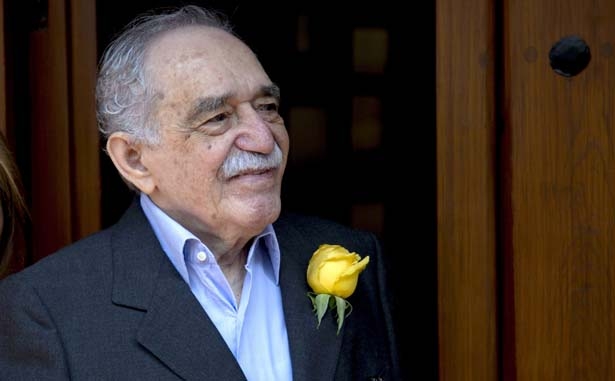
Gabriel García Márquez in March, 2014, credit: Eduardo Verdugo, AP // The Nation,
| |||||||||||
by Greg Grandin
| |||||||||||
Tuesday, April 22, 2014
Reclaim the University- Administration and Faculty Failure at Sacramento State

by Duane Campbell
I just returned from a panel discussion at Sac State by faculty and students on Reclaim the University. The event was sponsored by Students for Quality Education an organizing group with years of experience. There were strong positions on the need to hire new ethnic faculty made by both faculty and students. Student after student reported that they had few contacts with ethnic faculty. While there are some 22% of the students who are Latino, less than 6 % of the faculty are Latinos - less today than in 1974.
African Americans are similarly under represented.
I just returned from a panel discussion at Sac State by faculty and students on Reclaim the University. The event was sponsored by Students for Quality Education an organizing group with years of experience. There were strong positions on the need to hire new ethnic faculty made by both faculty and students. Student after student reported that they had few contacts with ethnic faculty. While there are some 22% of the students who are Latino, less than 6 % of the faculty are Latinos - less today than in 1974.
African Americans are similarly under represented.
In 1972 the Government Dept. at Sac State had 2 African
American faculty members and one Latino.
Today that department has 1 African American faculty member. A parallel decline in Chicano/Latino faculty
has occurred in the History Department and in the College of Education.

A major contributor to the problem in the College of Education has been the elimination of the Department of Bilingual/Multicultural Education.
When the BMED department existed from 1994- 2010, Mexican American/Latino credential students
in the College constituted some 34 % of the total students enrolled. Since the elimination of the department
Mexican American/Latino students constitute some 6% of the students in teacher
preparation. Latino students make up more than 40% of the students in local k-12 schools. Who will be their teachers?
Saturday, April 19, 2014
Alejo bill moves California toward offering Ethnic Studies
by Roque Planas

Although controversies over Mexican-American studies have roiled conservatives in Southwestern states, Alejo's bill could put California on the path to adopting one of the most ambitious ethnic studies program for public schools in the country.
Latinos are the largest ethnic group in California schools by far, making up 53 percent of the student body, according to the California Department of Education. They are followed by non-Hispanic whites, at 26 percent, and Asians, at 9 percent.
But though people of color make up the solid majority of California's schools, ethnic studies proponents say their history and culture remain largely absent from classrooms and textbooks.
"We have probably one of the most diverse student populations in the country," Alejo told The Huffington Post. "We recognize those unique values and history, language and literatures -- all of that should be included in California’s high school curriculum."
See the well researched article here.
This is an important step in the direction urged by the Mexican American Digital History Project for years.
Thursday, April 10, 2014
Texas- One step toward Ethnic Studies.
by Roque Palanco
Texas took a step toward instituting ethnic studies courses in public schools across the state on Wednesday, with the State Board of Education voting 11 to 3 to create instructional materials for such classes.
Activists had pushed since November for the Texas SBOE to create a statewide Mexican-American studies curriculum, arguing that such courses would help boost student achievement and foster cultural awareness in the state’s majority-Hispanic school system.
Instead, the more modest measure approved Wednesday mandates the adoption of textbooks for elective classes on Mexican-American studies, African-American studies, Native-American studies and Asian-American studies. Courses will be developed locally and schools will be able to adopt successful models developed in other districts using the state-approved instructional materials.
ed.note. What about California????
The idea won bipartisan support, with conservatives applauding the approach of giving local districts control over which curricula to adopt, while ethnic studies advocates looked forward to taking a greater role in developing the courses than if the state had been charged with the task.
Texas School Board Ducks Mexican-American Studies Vote
By WILL WEISSERT Associated Press April 10, 2014.
The Texas Board of Education bypassed voting Wednesday on a hotly debated proposal to create a statewide Mexican-American studies course as a high school elective, instead simply asking publishers to submit textbooks for such a class and several other ethnic studies topics by the 2016-2017 school year.
Democratic member Ruben Cortez of Brownsville had promised to call for a vote on creating a stand-alone Mexican-American studies course, and supporters maintained it was key to truly understanding a state that was once part of Mexico and where Hispanics make up 51 percent of public school students.
But opponents dismissed the idea as reverse racism, arguing that it would inject leftist ideology into the classroom. Cortez said when it became clear that the board's 10 Democrats and five Republicans weren't ready to support his proposal, he settled on an alternative approach.
Monday, April 07, 2014
Immigration Uprising: How Change Happens
HOW CHANGE HAPPENS: THE IMMIGRATION UPRISING
By David Bacon
Two weeks ago hundreds of people inside the Tacoma Detention Center launched a hunger strike against its private operator, Geo Corporation, demanding better conditions and a moratorium on deportations. Activists, who have held vigils outside the center for years, now gather every day to support those inside. A week later the strike spread to another Geo facility in Texas. According to Maru Mora Villapando of Latino Advocacy in Tacoma, in both locations the company has isolated the strikers and in Tacoma threatened to force-feed them.
Immigrants, workers, union members, people of faith and community activists demonstrate in front of the Mi Pueblo market in East Palo Alto, California, calling for a moratorium on deportations and on the firing of undocumented workers because of their immigration status. (Photo: David Bacon)
This is only the most dramatic action of a wave of activity around the country, in which community and labor activists, and now deportees themselves, have refused to quietly endure increased immigration enforcement. They are mostly young, deriving much of their inspiration from the Dreamers who forced the administration two years ago to begin providing legal status to some of those who’d otherwise be deported. These activists refuse to wait for Congress to enact its immigration reform proposals, and in fact many reject them as fatally compromised. Instead, they’re organizing actions on the ground to win rights and equality:
Yes We Can. NYTimes Editorial
"Yes He Can, on Immigration" - NYTimes Editorial
If President Obama means what he says about wanting an immigration system that reflects American values, helps the economy and taps the yearnings of millions of Americans-in-waiting, he is going to have to do something about it - soon and on his own. It has been frustrating to watch his yes-we-can promises on immigration reform fade to protestations of impotence and the blaming of others. All Mr. Obama has been saying lately is: No, in fact, we can't, because Republicans and the law won't let me.
Mr. Obama is correct when he complains that long-term immigration repairs have been throttled in Congress. Neo-nativist Republicans fixated on mass deportation have blocked a worthy bipartisan bill. But Mr. Obama has compounded this failure by clinging to a coldblooded strategy of ramped-up enforcement on the same people he has promised to help through legislation that he has failed to achieve.
Saturday, April 05, 2014
Deportations Hurt All Workers

Liz Cattaneo. Jobs with Justice
Although President Obama has called deportations “heartbreaking,”immigrants in the United States continue to be separated from their families at a record pace. Nearly two million deportations have taken place under the Obama administration to date. On March 13, the President finally ordered the Department of Homeland Security (DHS) to review its deportation practices but has rebuffed calls to use his executive powers to halt deportations for individuals who haven’t committed serious crimes.
A growing chorus of civil rights, faith, legal and human rights advocates are criticizing the administration’s deportation policy as unjust, arbitrary and counter to the spirit of immigration reform supported by the president and an overwhelming majority of Americans. There are myriad reasons why deportations should be curbed, but to start, the system makes it too easy for workers to be susceptible to abuse on the job.
Tuesday, April 01, 2014
Monday, March 31, 2014
Mexican American Studies in Texas Schools
One Vote Could
Change The Course Of Mexican-American Studies
Texas State Board of Education
member Ruben Cortez says he'll propose a vote to decide whether to create a
statewide Mexican-American studies course at the agency's meeting next month.
If passed, the measure would mark a
major victory for Latino education activists who have pressed for a public
school curriculum more reflective of their state's majority-Hispanic student
body.
Ed. note. California does not have Mexican American Studies in the state approved curriculum. See https://sites.google.com/site/chicanodigital/home/why-california-students-do-not-know-chicano-history
"This is it -- we've been
inching our way to a vote," Cortez told The Huffington Post. "Just
the mere fact that we're going to have a vote is historic."
The group Librotraficante, formed
in 2012 to protest the banning of the Tucson Mexican-American studies program,
started calling last year for the Texas SBOE to include a dual-credit
Mexican-American studies course when the state agency took up the question of
new course design.
Wednesday, March 26, 2014
Strategic Racism and the Contested Legacy of Cesar Chavez and Dolores Huerta

On March 31,
Eleven states will hold holidays
celebrating labor and Latino leader
Cesar Chavez. A new film Cesar
Chavez: History is Made One Step at a Time, starring Michael Peña
as Cesar Chavez and Rosario
Dawson as Dolores Huerta opens in cities
across the country on April 4, 2014. Here is a trailer. https://www.youtube.com/watch?v=GLkfMrqAmD0
There is a film review by Randy Shaw
in the post below.
Let us be clear. Chavez was religious, but he was not a saint. Neither
were the growers, the Teamster collaborators, nor corporate agribusiness
saints. Celebrations should not be about
hero worship or uncritical praise, nor should we ignore the present oppression
of farm workers in the U.S.
What Chavez and Huerta did
accomplish along with Philip Vera Cruz ,
Marshall Ganz, LeRoy Chatfield, Gil Padilla and hundreds of others was to organize in California the first successful
farm worker union against overwhelming odds.
With Larry Itliong, Philip Vera Cruz, and
others Chávez and Huerta deliberately
created a multiracial union; Mexican,
Mexican American, Filipino, African-American, Dominican, Puerto Rican
and Arab workers, among others, have been part of the UFW. This cross-racial organizing was necessary in order to combat the prior divisions and exploitations of workers
based upon race and language. Dividing the workers on racial and language lines, as well as immigration status always left the corporations the winners.
Each of the prior attempts to organize a farm worker union had been
destroyed by racism and corporate power. Chávez chose to build a union
that incorporated the strategies of social movements and community organizing. They allied the union with churches,
students, and organized labor. The successful creation of the UFW
changed the nature of labor organizing in the Southwest and
contributed significantly to the growth
of Latino politics in the U.S.
Saturday, March 22, 2014
Cesar Chavez film inspires
by Randy Shaw

The atmosphere was electric in Berkeley’s California Theater as a full house waited in anticipation for Diego Luna’s new film, Cesar Chavez. A block long line of people were turned away, reflecting an interest in the movie that Luna hoped would return when the film is released in three weeks.
Having spent years researching and thinking about Cesar Chavez for my book, Beyond the Fields: Cesar Chavez, the UFW, and the Struggle for Justice in the 21st Century, I was intrigued by how a feature film would handle the long and complex story of the farmworkers movement. And I think it covered the story of Cesar Chavez himself remarkably well for the years covered in the movie.
http://youtu.be/awP3yXv-4ng

Chavez’s Remarkable Life
Cesar Chavez’s rise from a young boy carrying cantaloupes in the fields to one of the nation’s leading labor and social change leaders is a story that almost defies belief. Among the film’s great strengths is its focus on how Chavez overcame seemingly insurmountable obstacles to build California’s farmworker movement.No film on historical events can provide the detail and nuances of a book, and in this case the facts overlooked was the critical role of other key leaders in the UFW’s rise.
Friday, March 21, 2014


Thursday, March 20, 2014
Florida Farmworkers Take on Industry
In 'Fair Food' Fight, Florida Farmworkers Take On Industry
http://www.commondreams.org/headline/2014/03/16-3
Sara Lazare
Common Dreams

The Immokalee, Florida migrant farmworkers who have forced some of the biggest food industry corporations in the world to acquiesce to their demands for dignity in the fields say they are determined to make Wendy's and Publix do the same.
To prove it, the Coalition of Immokalee Workers [1] launched their 'Now Is the Time' tour in early March, staging rallies and actions in ten cities in 10 days that culminated in an overnight vigil of hundreds at a Lakeland, Florida Publix on Friday and Saturday.
Their demands? That Wendy's and Publix support a penny-per-pound pay increase for tomato pickers, back-up a zero-tolerance policy for abuse and sexual harassment, and allow workers to exercise their rights to organize and work safely.
Now under the banner of the Fair Food Program [2], these demands emerged from the earliest days of CIW organizing in the early 1990s, in which mostly Mexico, Guatemala, and Haiti born migrant farmworkers joined together to fight low pay, rampant wage theft, workplace abuse, and modern-day slavery [3]. The organization, which has since swelled to 5,000 farmworker members, has forced a dozen [4] of the world's wealthiest fast food and grocery corporations to sign onto the Fair Food Program, including Walmart in January 2014.
To prove it, the Coalition of Immokalee Workers [1] launched their 'Now Is the Time' tour in early March, staging rallies and actions in ten cities in 10 days that culminated in an overnight vigil of hundreds at a Lakeland, Florida Publix on Friday and Saturday.
Their demands? That Wendy's and Publix support a penny-per-pound pay increase for tomato pickers, back-up a zero-tolerance policy for abuse and sexual harassment, and allow workers to exercise their rights to organize and work safely.
Now under the banner of the Fair Food Program [2], these demands emerged from the earliest days of CIW organizing in the early 1990s, in which mostly Mexico, Guatemala, and Haiti born migrant farmworkers joined together to fight low pay, rampant wage theft, workplace abuse, and modern-day slavery [3]. The organization, which has since swelled to 5,000 farmworker members, has forced a dozen [4] of the world's wealthiest fast food and grocery corporations to sign onto the Fair Food Program, including Walmart in January 2014.
Tuesday, March 18, 2014
Subscribe to:
Posts (Atom)