Wednesday, January 11, 2017

Xavier Becerra Passes First Hurdle

Republicans vote No.
Democratic Los Angeles Congressman Xavier Becerra today cleared the first hurdle to becoming California's next attorney general.
A state Assembly committee controlled by Democrats voted six-to-three to support him. Becerra would replace Kamala Harris, who was elected to the U.S. Senate.
Becerra told committee members he wants to work with the state legislature.

"I hope you'll find me as someone who will listen," said Becerra. "More than that, I'm ready to do stuff. I'm probably on the downside of my life and certainly of my career in public service. And I intended to make sure I do something with it."
Becerra - who turns 59 later this month - is the first in his family to graduate from college. His mother was born in Mexico and immigrated to the U.S. after marrying his father.
"I understand exactly what my parents made possible for me," said Becerra. "And what my wife and three daughters have put up with. And so I want you to know that I take this very seriously. I look forward to working with you because each and everyone one of you can make a difference for this state and for our country. And I hope to partner with you so we can get some stuff done."
Republicans on the panel questioned Becerra on how he would work with law enforcement to curb crime. All three Republicans on the nine-member committee voted "not to confirm." Becerra promised to vigorously defend California laws from federal interference.
Becerra will now be considered by the full Assembly chamber. The Senate is also scheduled to hold a confirmation hearing.

Tuesday, January 10, 2017

Hearings Today - Anti Immigrant Trump Appointees

THIS WEEK: KELLY, SESSIONS CONFIRMATION HEARINGS: The Senate will hold confirmation hearings Tuesday for two nominees who'll affect immigration policy: retired Marine Gen. John Kelly (Department of Homeland Security) and Alabama Sen. Jeff Sessions (Justice Department). The hearing for Labor nominee Andrew Puzder was originally set for this week but is now postponed to Jan. 17.
Kelly has gotten a warm reception from Democratic members of the Homeland Security and Governmental Affairs Committee.
Still, Kelly will be grilled about the immigration policies of President-elect Donald Trump. The border wall (Mexican-financed or otherwise) will come up. So will Trump's threatened termination of President Obama's Deferred Action for Childhood Arrivals program, which grants deportation relief to undocumented immigrants who arrived in the U.S. as children. And it's hard to imagine a hearing that doesn't touch on Trump's idea to deport millions of immigrants with criminal records, or Trump's proposed reinstatement of a registry to track visitors from certain Muslim countries. 

How might an Attorney General Sessions affect immigration policy? Well, the Justice Department may be asked to defend the constitutionality of re-establishing a registry of visitors from Muslim countries (or Trump's more constitutionally-dubious ban on Muslims entering the United States), Matt Zapotosky and Sari Horwitz report in the Washington Post. Advocacy groups also fear that Sessions will use information obtained through DACA to deport undocumented immigrants. 
Sessions' views on immigration are well-known. In 2007 he opposed legislation supported by then-President George W. Bush that gave legal status to millions and enhanced border security. Armand DeKeyser, Sessions' former chief of staff, told the Post that Sessions' hardline views were influenced by a listening tour in the late 1990s visiting city police chiefs and county sheriffs. "In the years that followed his listening tour," Zapotosky and Horwitz report, "Sessions came to believe that the undocumented immigrants in rural Alabama were taking the jobs of other residents. He advocated against even legal immigration, arguing that anyone coming to the United States should benefit the citizens already here." More here.

Sunday, January 08, 2017

US Policies Drive Migrants from Central America

http://www.dsausa.org/us_policies_drive_migration_from_central_america

By David Bacon
The mass migration of children from Central America has been at the center of a political firestorm in the United States. Both migration and deportation increased again in late 2016, causing the mainstream media to run even more stories blaming families, especially mothers, for sending or bringing their children north. Even President Barack Obama himself lectured them, as though they were simply bad parents. “Do not send your children to the borders,” he said recently.

(Post originally written in 2016.  Updated 2017)


Under the new Trump administration,  the Tea Party and conservative Republicans are using this issue to attack Obama’s executive action in 2009 deferring the deportation of young people, along with his proposal to expand it to include family members of legal residents and citizens. More broadly, the right wants to shut down any immigration reform that includes legalization and is gunning for harsher enforcement measures. Marine Corps general John Kelly, former commander of the U.S. Southern Command, calls migration a “crime-terror convergence.”

This push for greater enforcement and a conflation of migrants with terrorists ignores the real reasons families leave home. Media coverage focuses on gang violence in Central America, as though it were unrelated to a history of U.S.-promoted wars and a policy of mass deportations.

In fact, U.S. foreign and immigration policy is responsible for much of the pressure causing this flow of people from Central America.

There is no “lax enforcement” on the U.S. - Mexico border. The United States spends more on immigration enforcement than on all other enforcement activities of the federal government combined. There are more than 20,000 members of the Border Patrol, the largest number in history. We have walls and a system of detention centers that didn’t exist just 15 years ago. More than 350,000 people spend some time in an immigrant detention center every year. Yet the Tea Party and the Border Patrol demand increases in the budget for enforcement, and the Obama administration bends before this pressure.

 The migration of children and families didn’t start recently. The tide of migration from Central America goes back to wars that the United States promoted in the 1980s, in which we armed the forces most opposed to progressive social change. Two million Salvadorans alone came to the United States during the late 1970s and ‘80s, as did Guatemalans and Nicaraguans. Whole families migrated, but so did parts of families, leaving loved ones behind with the hope that someday they would be reunited.

The recent increase in the numbers of migrants is not just a response to gang violence, although this seems to be the only reason given in U.S. media coverage. Growing migration is a consequence of the increasing economic crisis for rural people in Central America and Mexico. People are leaving because they can’t survive where they are.

The North American and Central American Free Trade Agreements and structural adjustment policies required privatization of businesses, the displacement of communities by foreign mining projects, and cuts in social budgets. Huge U.S. corporations dumped corn and other agricultural products in Mexico and Central America at low prices, forcing rural families off their lands when they could not compete.

When governments or people have resisted NAFTA and CAFTA, the United States has threatened reprisals.


Monday, January 02, 2017

When Liberals Criticize Liberals About the Election

And don't consider the consequences to the Latino Community.

Dissent Magazine has posted an article entitled, "The End of Progressive Neoliberalism,"
https://www.dissentmagazine.org/online_articles/progressive-neoliberalism-reactionary-populism-nancy-fraser
Since Dissent does not permit comments on their articles, I will post my response below.

Thank you for the piece, The End of Progressive Neoliberalism by Nancy Fraser from Dissent. I wondered how folks such as the writer justified the position of not organizing all available forces to defeat Trump.  It is good that you came out of the closet. I think you represent many, I have been looking for someone to speak up from this perspective ( not my own).

From your essay you seem to consider the contamination of our politics by the Clinton, neoliberal machine as a greater danger than the potential victory by Trump and his neoliberal proto fascists.

I have some issues of dissent from your piece. There is a left in the US.  Weak, yes, but it exists. For example the CCDS says of the election,
“”The movement for justice and progress in the U.S. has suffered a great setback. And the depth of the reactionary movement that led to this setback was underestimated by most on the left. It’s necessary to reflect on what it has taught us and about our shortcomings but it’s also vital to assess our strength to meet this great challenge.”   I think they are referring to your position  when they say,

“And the depth of the reactionary movement that led to this setback was underestimated by most on the left.”

Democratic Socialists of America’s position is here:


There were a good number of socialists ( not liberals) who worked night and day to defeat Trump including myself.  Most did so on some form of this perspective.

While you make good points in criticizing liberals  ( you call them  progressive neoliberalism), I encourage you to continue to explain your own view.
I will use data from California  in response since I know the data from here more than national data. The Trump election is most likely going to eliminate health care for some 2-4 million children, in particular the children of the undocumented.  Some 2-4 million workers ( immigrants) now face deportation.  At least 40 % of these are parents of U.S. citizen children.
These and other consequences are described here:

Latino voters will reshape American politics as we know it — and here’s the proof - Salon.com

Latino voters will reshape American politics as we know it — and here’s the proof - Salon.com

We Are Witnessing the Birth Pangs of a Third Reconstruction | Portside

We Are Witnessing the Birth Pangs of a Third Reconstruction | Portside


How to build a movement for progressive change, from the Ground Up.

Rev. William J. Barber

Sunday, January 01, 2017

School Choice Education Secretary Not What Latino Students Need

 new piece was just released on NBCNews.com: 'School Choice' Education Sec. Not What Latino Students Need http://www.nbcnews.com/news/latino/opinion-school-choice-education-sec-not-what-latino-students-need-n694881

Julian Vasquez Heilig, Ph.D. ▪ Professor, Educational Leadership and Policy Studies ▪ Director, Doctorate in Educational Leadership ▪ California State University Sacramento ▪ Eureka 318A 6000 J Street Sacramento, CA  95819-6079

Tuesday, December 20, 2016

Can American Fascism Be Stopped? @alternet

Can American Fascism Be Stopped? @alternet: Trump's win was both a perfect storm and the culmination of long term trends. Can American fascism be stopped?

Sunday, December 18, 2016

Transition Adviser Peter Thiel Could Directly Profit From Mass Deportations

Transition Adviser Peter Thiel Could Directly Profit From Mass Deportations

Building a super net of information sharing.

Miles Marcharon en Los Angeles Contra la Politica de Trump

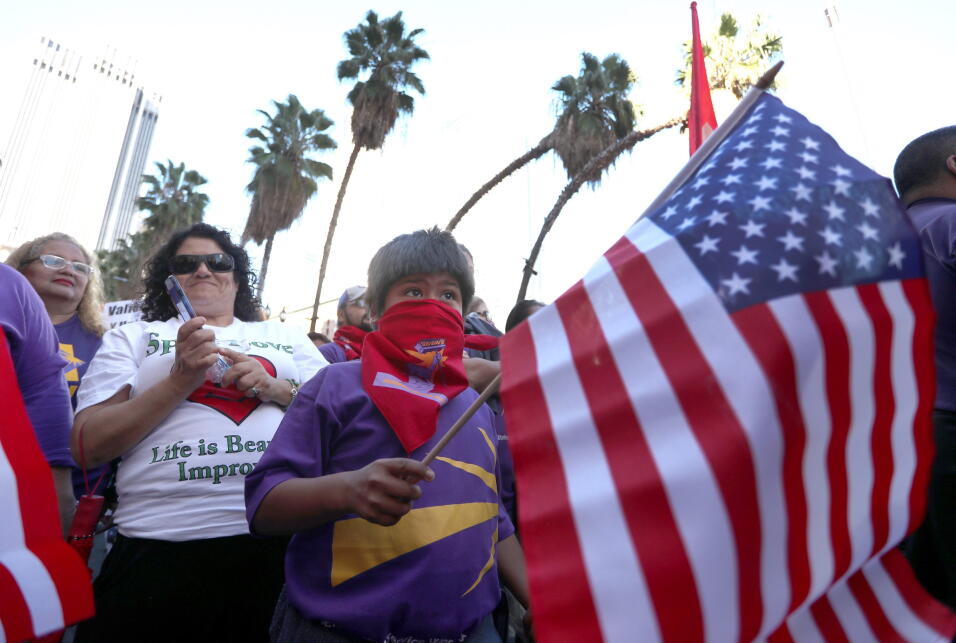
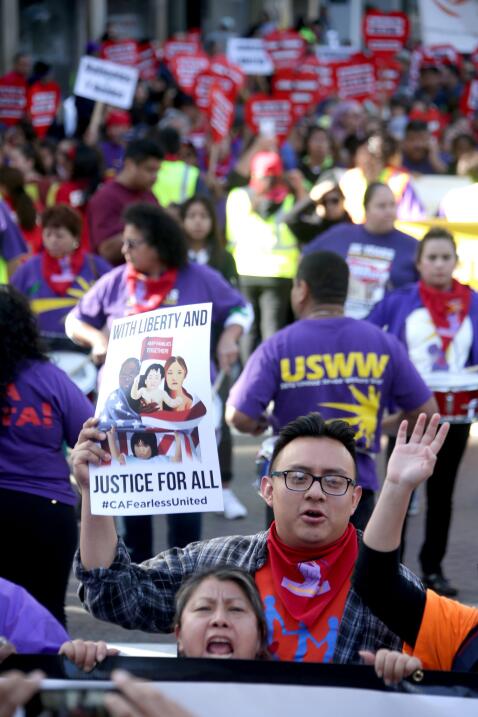
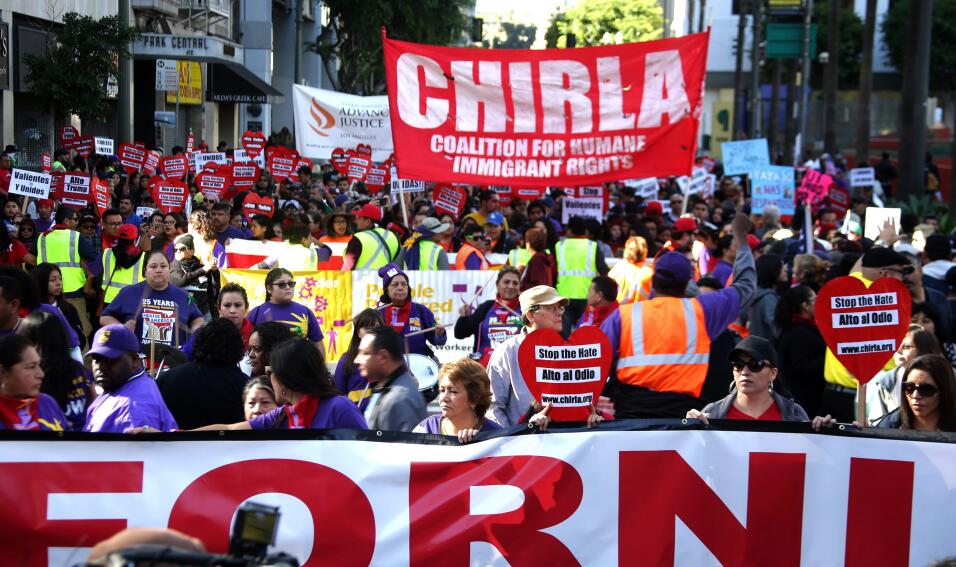
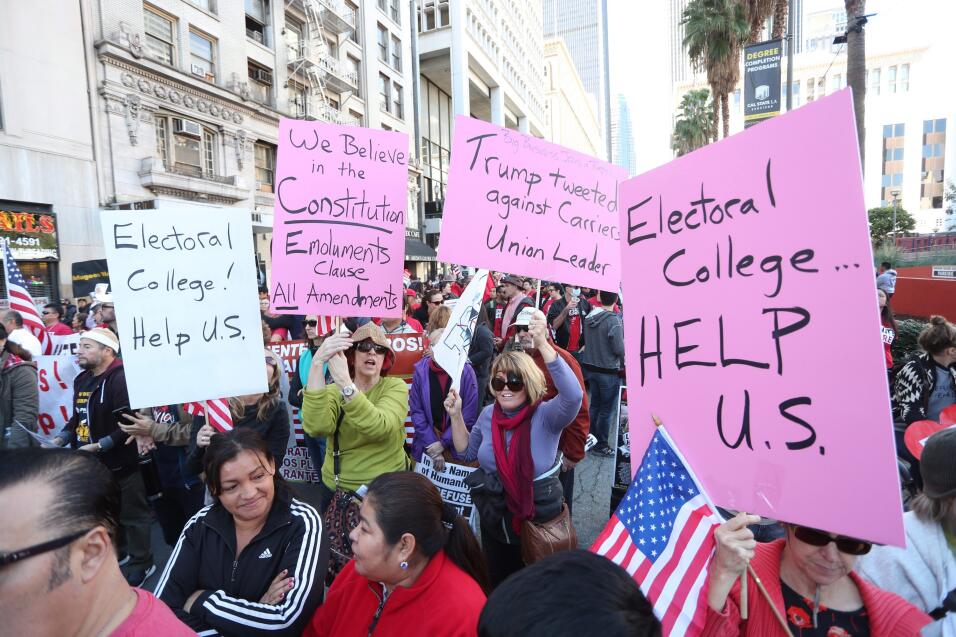
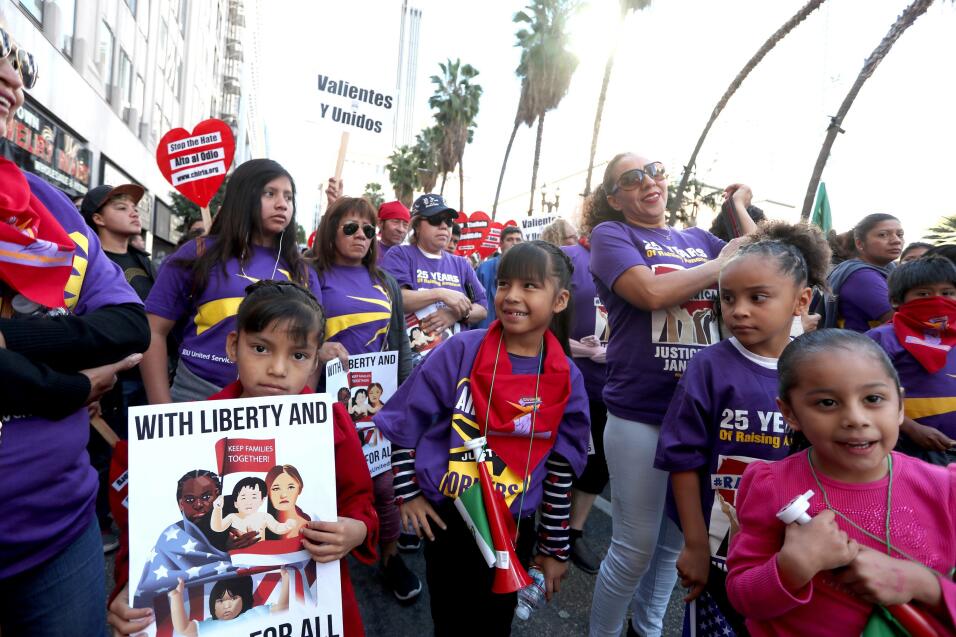
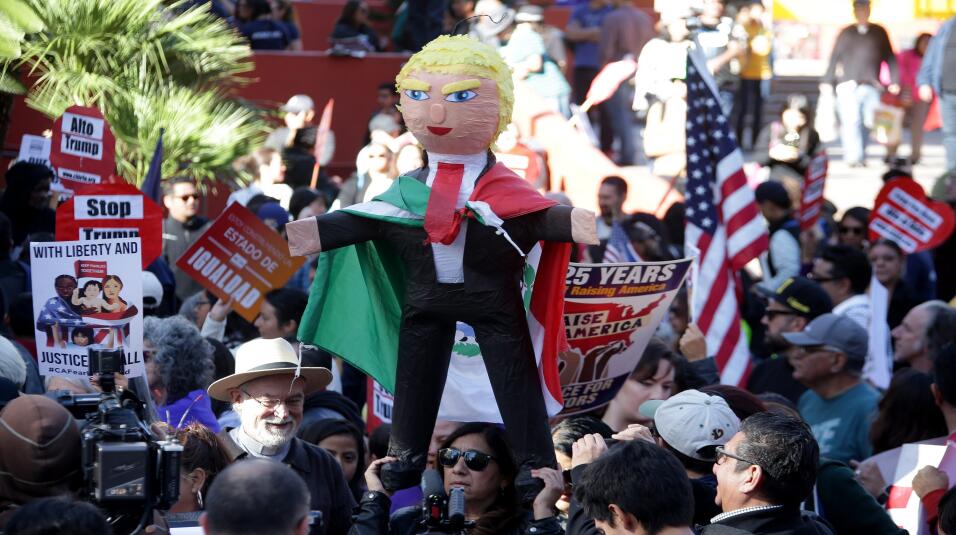
LOS ÁNGELES, California.- Miles de personas marcharon este domingo por las calles de Los Ángeles para festejar el ‘Día Internacional del Migrante’ y mandar nuevamente un mensaje de unidad frente a las políticas de deportaciones masivas que se prevé llevará a cabo el próximo gobierno de EE.UU. que presidido por Donald Trump.
Bajo el lema ‘California sin miedo y unida’, legisladores estatales, políticos locales, así como representantes sindicales y organizaciones comunitarias y religiosas se manifestaron pacíficamente durante unas horas por el centro urbano hasta llegar al ayuntamiento de la ciudad, donde se reiteraron las promesas de más protestas en 2017.
"Las declaraciones nefastas del presidente electo sobre las deportaciones masivas han hecho que mucha gente trabajadora tenga preocupación, por eso tenemos que salir y decir que no vamos a dejar que esto pase" dijo a EFE el presidente pro tempore del Senado de California, Kevin de León.


Wednesday, December 14, 2016

Trump Appoints Another Anti Immigrant Advisor

IMMIGRATION HARDLINER GETS POLICY POST: President-elect Trump appointed immigration hardliner Stephen Miller his senior policy adviser Tuesday. Miller handled national policy issues for the Trump campaign and, before that, was communication director for Sen. Jeff Sessions (R-Ala.), Trump's nominee for attorney general. In a June profile for POLITICO Magazine, Julia Ioffe called him "The Believer" and observed that he joined Trump's campaign at an opportune time. "He's deeply connected to some of the most powerful insurgent threads in the Washington GOP, most notably Alabama Senator Jeff Sessions and the Breitbart media machine," Ioffe wrote. "As an aide on Capitol Hill, he was a behind-the-scenes architect of the successful effort to kill comprehensive immigration reform in 2014." A former Senate colleague of Miller's told Ioffe that Miller's hawkish views on immigration derive from his upbringing in California, which he saw flip from red to blue as the immigrant population increased.
From Politico, Morning 

Presidente Trump, Mexico’s Worst Nightmare

Presidente Trump, Mexico’s Worst Nightmare

Tuesday, December 06, 2016

Fighting Back Against the White Revolt of 2016


Bill Fletcher, Jr. and Bob Wing


   November 28, 2016
Verso Press
On the left and within progressive movements there were two immediate responses to Donald Trump’s victory in the presidential elections. First, shock, frequently accompanied by despair. How could an openly racist, misogynist authoritarian — personally unstable to boot — be elected president? Second, anger with the Democrats for the sort of campaign that they waged.At that point, however, a division emerged around a third point: what, we asked, was the source of Trump’s victory? And, even more important, what are the strategic implications?
It is important to approach any examination of the November election with a degree of nuance. As widely noted, Hillary Clinton won the popular vote by what now appears to be at least two million votes. The Libertarian and Green Parties received far more votes than the margin of victory in no less than eleven states, including Pennsylvania, Michigan and Wisconsin.
This election was decided by a razor-thin margin due to the undemocratic Electoral College.
Approximately 55% of eligible voters went to the polls, down from both 2008 (61.6%) and 2012 (58.6%). Trump, then, actually received around 25% of eligible votes. This figure of 25% is quite significant because it appears to be that percentage of the electorate that has, for at least a decade, been fairly consistently reactionary.
Senator Bernie Sanders and several other commentators have attributed most of Trump’s success to the fact that he played to allegedly legitimate concerns of the masses. We disagree quite strongly. The vast majority of the Trump vote was the Republican base. These are the voters who have long adamantly opposed the Obama agenda from a staunchly rightwing perspective and, for that matter oppose almost all progressive causes. In various opinion polls what is notable is that for this segment of the electorate, terrorism and immigration are a top concern. It is also worth noting that, at least during the primaries, Trump’s base had a median income above both the national median and the median for both Sanders and Clinton voters.
So, while it is true that Trump received 14% more votes from white people with less than a college education than did Romney, and 10% fewer from whites with a college degree, Trump voters were not mainly poor and unemployed. As Mike Davis points out in a recent blog post, there was no massive defection of white working class voters to Trump. [http://www.versobooks.com/blogs/2948-not-a-revolution-yet] [1] In fact, Clinton won the majority of voters earning under $30,000 (53% to 41%) and voters under $50,000 (51% to 42%). These figures are critical to keep in mind when commentators describe the Trump victory as a working class vote. How are they defining “working class”?
Moreover, it is never to be forgotten that Hitler and Mussolini had large support in the working class. The full Nazi party name was the National Socialist German Workers’ Party. Mussolini was previously a top leader of the powerful left wing of the massive Italian Socialist Party. Even had November 8th been a working class revolt—which it was NOT—that could not be looked at in isolation from its politics and color.
Yet, Trump voters as a whole were overwhelmingly white, and herein lies the discussion that truly needs to happen.